As the United States approaches its 250th anniversary, what kind of country do we want to become?
We speak with Taifa Butler, President of Demos, about the challenges facing American democracy and the need for a “Third Reconstruction.” We discuss the connection between economic power and political power, the role of worker power in a healthy democracy, the enduring impact of racism and the racial wealth divide, and why America’s democratic institutions are at a critical crossroads. Butler argues that the nation must move beyond incremental reforms and embrace a more expansive vision of citizenship, democracy, and shared prosperity.
Listen to prior episodes of the show
Follow Policy for the People on your favorite podcast app



Transcript
[We make this transcript available for your convenience and to increase the accessibility of our content. The transcript was generated by software and was slightly edited for clarity. If you are able to, we encourage you to listen to the recording.]
Juan Carlos: As we celebrate our nation’s 250th anniversary. It’s important to reflect how far we’ve come and where we’ve fallen short of living up to the promise of the Declaration of Independence, the idea that we’re all created equal, that we all possess the right to life, liberty, and the pursuit of happiness.
Our nation’s history has been one of periods of great progress. Progress towards extending equal rights to all, followed by periods of backlash, of retreat. Today is an especially fraught time, as we see the Trump administration upending democratic norms and concentrating power in the hands of the executive branch. But the greatest threat to our democracy and freedom comes from the concentration of economic and political power in the hands of big corporations and billionaires, according to today’s guest, Taifa Butler.
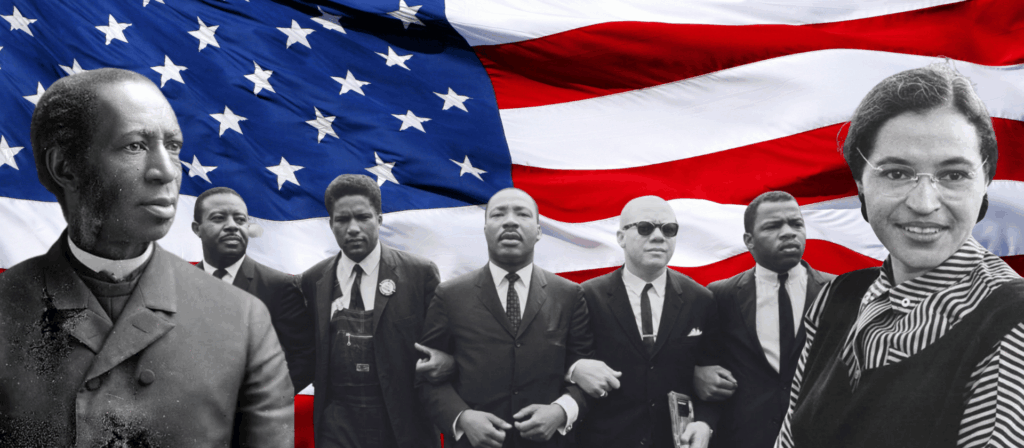
Taifa is the president of Demos, a nonprofit public policy organization working to build a just, inclusive, multiracial democracy and economy. In this episode of Policy for the People, we talk with Taifa Butler about the challenges facing American democracy in the need for a third reconstruction, a term harkening to those periods in our nation’s history that made the greatest strides in increasing freedom and equality for black Americans and people of color.
As Taifa argues, it’s time for a nation to embrace a more expansive vision of citizenship, democracy, and shared prosperity. I began my conversation with Taifa by asking her about her assessment of where our nation stands today. This is how she responded.
Taifa: We are at a critical juncture in our nation, and I would say that it’s a defining moment for where we are to go and whether or not we’ll live into this vision of truly having a multiracial democracy.
And, you know, when I think about the history of this country and how our economy was built on extraction and racialized capitalism, and at this moment, right now, we’re seemingly have made so many strides in the last 60 years around civil rights and advancing a more inclusive democracy with the Voting Rights Act and the Civil Rights Act of the 1960s.
And we’ve seen over the last 60 years those civil rights protections being eroded not only through the courts, but through some of our legislative making or policy making, I should say. And so there’s, I think, a big challenge in our nation of who belongs. And I think you see that play out through the immigrant justice work, through this immigration battle and how people are being snatched off the street and disappeared and being detained in these centers around the country is that America has to decide, especially at the 250th anniversary, if we are going to be a nation that really lives into this constitution of liberty and justice for all.
We’ve got some real work to do to change what we think and what we believe. And that’s the enormous work that I believe is important. And we’ll talk about that later. In terms of some of the work that we’re thinking about building a new third, a third reconstruction. So I just think we’ve seen this pendulum shift over the last 60 years of undermining civil rights and civil protections for black and brown people in this country.
And I think the thing that keeps me up at night is the fact that America is projected to be majority people of color in the next two decades. And if we are not changing our systems and really ensuring that black and brown folks in particular have voice and agency and economic and political power in our democracy and in our economy, we will never get to the vision.
And so I just think this is a real moment of crisis, and it’s a real moment of opportunity at the same time. And I think what we’re seeing across the nation with the economic populism and the people, you know, feet in the streets and people are demanding and protesting. Because of what they’re saying right now, that’s the kind of energy that will really need to bring about, I think, this next remaking of America.
Juan Carlos: You’ve written that to understand how we got to this situation, you need to look into the cyclical relationship between economic and political power. Can you explain that relationship between economic and political power?
Taifa: You think about if you have economic power in this country, you are more likely to have more political power. And if you have more political power, you’re likely to have more economic power.
And that’s just a really vicious cycle that we see that we need to break in this country, because we’ve found that those who have higher means more wealth are able to influence the political rules that then govern how much money they can make, and vice versa. Those that have money can tweak the political rules. So, again, that they have more economic power and it benefits them in terms of their wealth generation or the regulation of businesses.
They are able to carve out those kinds of things that keep them untethered by some of the rules and the laws and the policies that should govern, you know, extreme wealth and should govern corporate behavior. And so I believe that our work today is to break that visual cycle of the powerful, the wealthy elite, being able to write rules that benefit them and really reimagine a cycle that’s more virtuous, that we are making it such that people have the kind of political say and influence and control over our democracy, where they can help write rules that help build the public good, that help, you know, ensure that people can have the kind of quality of life that they need good jobs.
They need to be able to have the safety net, but also opportunities to have worker rights and worker protections and worker power that ensures that our economy is working for everyday people.
Juan Carlos: So we at the Oregon Center for Public Policy talk a lot about the importance of increasing worker power, and we talk about it as something that is absolutely necessary if we want an economy that works for all of us.
But you also talk about worker power as being critical to having a well functioning democracy. I wonder if you can discuss that connection between worker power and democracy.
Taifa: Policy after policy, cycle after cycle, we know working people are shown that their labor is a commodity, right, and not a contribution. And workers today, particularly low income workers, are being pushed out of economic and political life, whether or not they’re being disempowered on the job or at the bank or even at the ballot.
And so I think, you know, as we look at some of the economic indicators where wages are suppressed, families, workers have fewer resources and then also less capacity to engage politically and invest in their own sort of civic life and civic power. Like it is really, I think, time that we center workers as a core voice and constituency when we think about our democracy.
Juan Carlos: How do race and racism factor into this dynamic, into this relationship between economic and political power?
Taifa: Well, you know, if we think about the history of this country and the fact that we have a long history from the 400 years of enslavement and the institution of slavery in our country, that was about extracting labor for free from black bodies in this country.
And all of the rule making and the policies that have resulted from that base line of slavery, and how white institutions and white families were able to generate wealth. And then when we finally got to emancipation and the first reconstruction and the reconstruction amendments in the Constitution that enable people to, again, not to end slavery, but then to have the political power to participate in elections and then also give people birthright citizenship for those who were born in this country and enslavement.
Those were the things that really opened up our Constitution for citizenship, for black people who were property and who were not seen as human beings. So that underlying beginning of our country, still, we are experiencing the fallout and the ramifications of not only those norms and values and beliefs, but how they’ve been coded into the rules and the policies throughout the history of this country, from the GI Bill, the exclusion of black people, being able to have homes in certain neighborhoods due to redlining in the banking industry from the GI Bill and some of our black and brown people of color who served in military, who weren’t able to benefit from some of the policies that white families did. There’s just been a host of ways that our government has perpetuated economic and democratic exclusion for these communities. And unless, until we really, I think, tell the truth and expose that long history of exclusion and how it has exacerbated where people live in communities, our ability to access the ballot fully and unfettered, and also the wealth generation that is created.
And we talk about one of the core problems that have existed, given those rules, is the racial wealth divide. I just think that we have some real work to do to not only address changing our hearts and our minds and really thinking about, like, the the new norms that we need as a nation, but also how do we repair some of this exclusionary policies and ensuring that people, especially this rising American majority, as I mentioned earlier, that they can fully participate and have power and agency in our in our, in our society.
So I think those are some of the things that historically play an important factor. And then when you think about, from our democracy standpoint, the poll taxes and all the things that happened in the past to keep people from the literary tests, to keep people from being able to vote, some of those same policies are playing out today with the Save act, which is nothing more than another barrier to keep people from accessing the ballot.
The copycat bills that are happening at the state level across the country and even most recently, the Callais (Louisiana v. Callais) decision, which really gutted the Voting Rights Act. That really minimizes the political power and the ability of black people and people of color in states to have the ability to have a political voice and political power, but also the ability to have representation that truly represents their needs and their communities.
So to me, those are still some of the things that are playing out present day that have underlying racist, you know, white supremacy, feeling to them, right, that they’re driven and animated by racism and white supremacy, and there’s no other way to to see that.
Juan Carlos: We take a break to say thank you for listening to Policy for the People. We appreciate you tuning in. We also want to ask for a quick favor. Please share this episode with your friends and family and give us a five star review on your podcast app. It helps others discover the show. Also, please consider supporting this show by making a tax deductible contribution to the Oregon Center for Public Policy.
The support of people like you makes all our work to advance economic justice in Oregon possible. Go to ocpp.org/donate. And make a contribution today.
Thanks. And now back to the show.
You referenced earlier, one of Demos initiatives called Toward a Third Reconstruction. And I want to ask you what that is. But before I get into the third reconstruction, can you just give us a quick overview of the other two reconstructions, just to sort of set the context?
Taifa: The first reconstruction was after the Civil War, in emancipation, we had 12 years of what we call reconstruction, where we had three reconstruction amendments that gave citizenship, that ended slavery and that enabled black men to vote.
And we had 12 years of what we would call our first go at multiracial democracy. So in the South, we had black men elected to Congress and other political positions. And so we were really practicing this multiracial governing. Well, after that 12 year period, the period of Redemption came, which is when white folks said, no more, we don’t want this.
And so they ran black people out of office. They quickly sort of redeemed the time. And why they’re called redemption is to ensure black people didn’t have political power. And that’s when we went into the period of black Codes, which were a restrictive, authoritarian type of laws that that really made black people unable to fully live in freedom. And also, we had this series, the season of Jim Crow, and it was during the time of the civil rights movement in the 40s and 50s and 60s that had the groundswell of a multiracial coalition, particularly led by black people, to make sure that we could live into civil rights for for black people in this country.
And that’s where we call that the second reconstruction, the civil rights enabled the Civil Rights Act, the Voting Rights Act, the Equal Opportunity Act, which was all to address the discrimination in our economy and for workers. It also enabled us to have access to the ballot with the Voting Rights Act and civil protections against discrimination and all the things that threatened our livelihood.
And so we’ve been living into this second reconstruction with those civil rights acts in the Voting Rights Act and the Equal Opportunity Act over the last 60 years. And given we’ve seen some of the retraction and the sort of slow burn of this redemption is feel where we’ve seen the fascists and the narrative stoking the divisiveness of this moment and and making sure that people feel afraid, or using language of fear against the sort of rising majority of black and brown people who are in this country who have rights and should have the same privileges.
And so to me, this is like I said, we’re at a critical juncture as a nation to live into a third reconstruction. You know, 60 years of civil rights were good for us. But now we see that we’re losing ground, even though we’ve made tremendous progress. And I think it now is time and ripe, especially at 250 years of this nation, is to think about what is the more expansive vision of citizenship, more expansive vision of our nation.
So that for me, when we think about America becoming majority people of color in the next two decades, one of the other trends, if we had done nothing when this report came out, was that black and brown people were also projected to have zero to negative net wealth in the next two decades. So if you have a demographic majority of people, but also people who have no economic power and are really strapped in terms of their economic abilities around just being safe and well and secure economically, what does that mean for America?
We will likely have apartheid in America. And so this, again, for me, is a reason why we have to live into a third reconstruction.
Juan Carlos: When I think about the past periods of reconstruction in this country, obviously they were tremendous advancements for people of color, for black people in the country in those periods. But I think it’s also important to underscore that white people also gained from these massive reforms.
I know that during the first period of reconstruction in the South, it was the first time that public schools opened up for black kids, but also for a lot of white kids as well, a lot of poor white kids. And so it seems that reconstruction is of benefit to all of us, the kinds of reforms that bring about the true democracy, true, you know, economic justice.
I wonder if you see that as well.
Taifa: I agree with that wholeheartedly. I think as we talk about, if there are ways that we can reimagine our economy and make sure that it can work for people of color who’ve been excluded, poor white workers, other workers, and the working class can benefit from those more inclusive policies, especially those who are in rural communities who are also struggling to make ends meet.
And I think as we try to imagine a more progressive but also expansive public good, you know, public education is a public good. Housing and health is a public health care is a public good. If we can think about ways to invest in those public goods, all people, regardless of race and race and ethnicity and geographic location, can benefit from those core components that help and like create a good quality of life.
Juan Carlos: Back in 2020, following the murder of George Floyd and the massive racial justice protests that took place, one might have thought that the Third Reconstruction had arrived. I wonder what you think of the aftermath of those protests, and what that says about kind of where we are today and the way forward.
Taifa: Oh, I love that idea. We had in our third reconstruction series on Nonprofit Quarterly a few months ago, in November or December, that we published a series of essays and one of the essays, we invited Professor Peniel Joseph out of UT Austin to write this piece to ground us on the third reconstruction.
And what I loved about Dr. Joseph’s piece, but also his body of work, he wrote a book on the third reconstruction, so I thought he was an expert in helping frame that. But he proffered in a positive way in that book that since George Floyd and the rise of the movement for Black Lives and a lot of the racial justice work that we saw over the last five years was the making of a third reconstruction.
And I think that point is debatable, but I do think it created a good groundswell and appetite for change. And we saw a lot of that. That drumbeat is still playing out and is now, I think, also being amplified through the current resistance work and the current pushback from communities around the country that this authoritarian consolidation of executive power is not in response to the racial justice moment.
And it’s also taking us backwards. So I think for us, is this last five years since George Floyd’s death, you know, we know that we won’t get to live into this, these constitutional sort of principles of life, liberty and the pursuit of happiness and protecting the general welfare. Like we won’t live into that until we tackle the racial injustice in this country.
I think we have a moment, as we think about this third reconstruction. And I think a lot of us who do policy work and as you do tax policy work, you know, you think about what are the incremental things that we can change some of the rules that that have some appetite, that people are like, oh yeah, that’s feasible.
We could fix that. I think we need to scrap it all and really think more expansively about the future, because if we think about our opponents and those who would uphold white minority rule, those who want to hoard power, they have been working for the last 50 to 60 years to undermine the civil rights gains that we’ve realized for black and brown people in this country.
And to go back to a more exclusionary society and that is where we all say, no, we’re not going back. So I think one, Juan Carlos, this moment, we have to. There is no going back what we’ve seen over the last nearly two years now with this administration, this government has been dismantled, the public good has been eroded.
And so there’s no hitting the button. New election. We’ve got new folks, and we could just restart the clock and sort of resume the status quo activities. There’s no way that we can go back to what was. We must rebuild going forward. And that’s where I think we have to be excited and innovative and not afraid to to reimagine this country.
Juan Carlos: So if we’re talking about reimagining the country and thinking, being ambitious, thinking expansively, what would be the top changes that would really make a difference, be it policy changes or structural changes? What would it look like? What is the third reconstruction really? What’s it really centered on?
Taifa: That’s a great question. In my piece, I offered sort of a framework of three things.
And they’re high level. And I think we all, as a community, need to think about the nitty gritty and the bones. But part of, you know, what I’ve been sharing today is the norms. You know, our country is built on norms that have been exclusive, that have been extractive, that have been about, you know, white supremacy and the lack of humanity.
Right. If you think about the beloved community and Martin Luther King and, you know, how can people live free of deprivation, right? Like, how are we changing the ways in which our society is built in the foundation? And so that work is really about what’s the ways that we shift our, our hearts and our values and our beliefs in this country.
Like if we plant and cast that vision of how much more inclusive and expansive a world could be without deprivation, with human dignity, for every person you know, our institutions then would operate differently. Our policies for engaging with everyday people would be different. So that’s one area that we’ve talked about is the norms. And I think that’s the hardest part, right.
How to change people’s beliefs and values. But that work has to happen. And then the other part for me is the new forms of power. You know, right now we are in a contest for power. Power that comes from a hierarchy top down. You know, whether that’s the government, the sort of those who are wielding power by sitting in elected office and writing the rules.
But then there’s this power that’s coming up from the ground that is the civic power, the infrastructure and communities, the grassroots power that’s demanding something better and different. That contest is happening every day, and to me, we will have to remake our institutions that really embrace that civic power and that power that’s coming from the ground. Because, again, I think we use these terms that people who are closest to the problems know the solutions.
You know, how do we capture the brilliance that’s happening in communities to actually write the rules and bring the solutions that will solve the problems that they face so that their lives can be better? So we’ll have to reimagine those, those forms of power. And then lastly, the institutions. You know, when I think about some of the training and the conversations we’ve had about just democracies backslide globally and what that means for America in light of other nations where we see authoritarianism on the rise.
One of the oxymoronic things about the US and our exceptionalism is that we have some of the most unjust and anti-democratic institutions, when you look globally. So, you know, our Supreme Court, our president’s office, the Congress, the fact that our Constitution is the hardest constitution to amend in the world. We have some real structural barriers to being able to live into the liberatory democracy that we want.
So for the folks who want to think about the Senate and abolishing it, or changing representation in the House with more people, or putting term limits and other ethics controls on the Supreme Court to enable it to be more just. Those are some of the bigger structural things that we’ll have to tackle in our country if we are going to really live into a third reconstruction. But to make sure that people are centered in how we make it so we don’t have this outsized influence by the wealthy and of the elite to continue this vicious cycle of power by those who are the richest among us.
Juan Carlos: Well, Taifa Butler, this is a good place to end it. Thank you so much for being on Policy for the People.
Taifa: Thank you so much, Juan Carlos, for having me. It’s be en a pleasure talking with you, and I look forward to staying in touch.
Juan Carlos: And thank you for listening to Policy for the People. We will see you next time.